

Smart ERP: How Machine Learning Is Changing Enterprise Planning
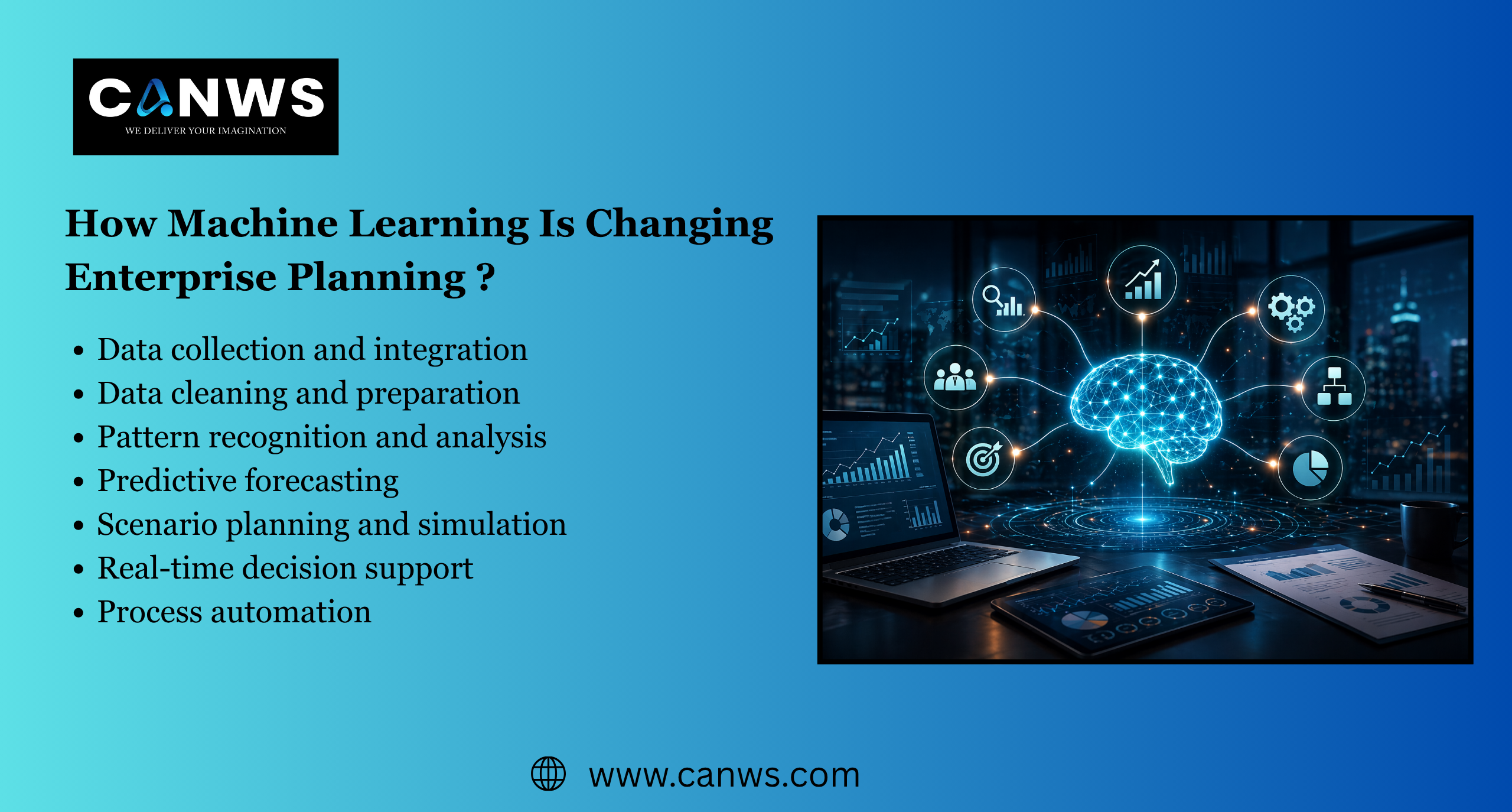
Enterprise Resource Planning (ERP) systems have long been the backbone of modern businesses, helping organizations manage operations, finance, supply chains, human resources, and more—all in one unified platform. However, traditional ERP systems often rely heavily on manual inputs, static rules, and historical reporting.
Enter Smart ERP powered by Machine Learning (ML)—a new era where ERP systems not only store and process data but also learn from it, predict outcomes, and automate decisions.
In this blog, we’ll break down everything a beginner needs to know about Smart ERP, how machine learning is transforming enterprise planning, and why businesses are rapidly adopting this technology in 2026.
Clearly, Smart ERP offers a competitive edge in today’s data-driven world.
What Is Smart ERP?
Smart ERP refers to ERP systems enhanced with advanced technologies like machine learning (ML), artificial intelligence (AI), predictive analytics, and automation. Unlike traditional ERP systems, Smart ERP can:- Analyze large volumes of data in real time
- Identify patterns and trends
- Predict future outcomes
- Automate repetitive tasks
- Provide intelligent recommendations
Understanding Machine Learning in ERP
What is Machine Learning?
Machine Learning is a branch of AI that allows systems to learn from data without being explicitly programmed. Instead of following fixed rules, ML algorithms:- Learn from past data
- Improve over time
- Adapt to new patterns
How ML Works in ERP
In an ERP system, machine learning:- Collects data from multiple departments
- Analyzes patterns (sales trends, inventory usage, customer behavior)
- Generates predictions (future demand, risks, delays)
- Automates decisions or suggests actions
Key Benefits of Machine Learning in ERP
1. Predictive Analytics for Better Decision-Making
One of the biggest advantages of Smart ERP is its ability to predict future trends. Examples:- Forecasting product demand
- Predicting cash flow
- Identifying potential supply chain disruptions
2. Automation of Repetitive Tasks
Machine learning automates routine tasks such as:- Invoice processing
- Data entry
- Order management
- Payroll calculations
- Human errors
- Operational costs
- Time spent on manual work
3. Improved Inventory Management
Smart ERP systems can:- Predict stock requirements
- Avoid overstocking or understocking
- Optimize warehouse operations
4. Enhanced Customer Experience
With ML, ERP systems analyze customer data to:- Predict buying behavior
- Personalize offers
- Improve service response times
5. Real-Time Insights and Reporting
Traditional ERP reports are often static and delayed. Smart ERP provides:- Real-time dashboards
- Dynamic reports
- Instant alerts
6. Risk Detection and Fraud Prevention
Machine learning can identify unusual patterns in financial data, helping to:- Detect fraud
- Prevent financial losses
- Ensure compliance
Real-World Use Cases of Smart ERP
1. Supply Chain Optimization
ML-powered ERP systems:- Predict delivery delays
- Suggest alternative suppliers
- Optimize logistics routes
2. Financial Forecasting
Smart ERP can:- Predict revenue trends
- Analyze expenses
- Identify cost-saving opportunities
3. HR and Workforce Management
Machine learning improves HR processes by:- Predicting employee turnover
- Automating recruitment screening
- Analyzing performance trends
4. Manufacturing Efficiency
In manufacturing, Smart ERP:- Predicts machine failures
- Schedules maintenance
- Reduces downtime
5. Sales and Marketing Intelligence
ML helps businesses:- Identify high-value customers
- Forecast sales trends
- Optimize pricing strategies
Smart ERP vs Traditional ERP
| Feature | Traditional ERP | Smart ERP |
| Data Processing | Manual & static | Automated & dynamic |
| Decision Making | Reactive | Predictive |
| Reporting | Historical | Real-time & predictive |
| Automation | Limited | Advanced |
| Intelligence | Rule-based | Self-learning |
Key Features of a Smart ERP System
When choosing a Smart ERP solution, look for:- AI & Machine Learning Integration
- Cloud-Based Infrastructure
- Real-Time Data Processing
- Predictive Analytics
- Automation Capabilities
- User-Friendly Interface
- Scalability
Challenges of Implementing Smart ERP
While Smart ERP offers many benefits, there are some challenges:1. High Initial Investment
Implementing advanced ERP systems can be costly, especially for small businesses.2. Data Quality Issues
Machine learning depends on high-quality data. Poor data leads to inaccurate predictions.3. Integration Complexity
Integrating Smart ERP with existing systems can be complex.4. Skill Gap
Employees may require training to use advanced features effectively.How to Successfully Implement Smart ERP?
Step 1: Define Your Business Goals
Identify what you want to achieve:- Better forecasting
- Automation
- Improved efficiency
Step 2: Choose the Right ERP Solution
Select a system that fits your:- Industry
- Budget
- Scalability needs
Step 3: Clean and Prepare Your Data
Ensure your data is:- Accurate
- Organized
- Up-to-date
Step 4: Train Your Team
Provide proper training to employees for smooth adoption.Step 5: Monitor and Optimize
Continuously track performance and improve processes using insights.Future Trends in Smart ERP
1. Hyperautomation
Combining ML, AI, and robotic process automation (RPA) for end-to-end automation.2. Voice-Enabled ERP
Users will interact with ERP systems using voice commands.3. Self-Learning Systems
ERP systems will continuously improve without manual intervention.4. Industry-Specific Smart ERP
Customized ERP solutions tailored for specific industries.5. Increased Cloud Adoption
Cloud-based Smart ERP will dominate due to flexibility and scalability.Why Smart ERP Is Essential in 2026?
In today’s competitive business environment:- Data is growing exponentially
- Customer expectations are rising
- Markets are constantly changing
- Intelligent
- Adaptive
- Predictive
Conclusion
Machine learning is transforming ERP systems from simple data management tools into intelligent business partners. With Smart ERP, businesses can:- Predict future trends
- Automate operations
- Improve decision-making
- Enhance customer experiences
FAQs
1. What is Smart ERP?
Smart ERP is an advanced ERP system that uses machine learning and AI to automate processes and provide predictive insights.2. How does machine learning improve ERP systems?
It enables ERP systems to analyze data, predict outcomes, and automate decision-making.3. Is Smart ERP suitable for small businesses?
Yes, especially with cloud-based solutions that are scalable and cost-effective.4. What industries benefit from Smart ERP?
Manufacturing, retail, healthcare, finance, logistics, and more.5. What is the future of ERP?
The future of ERP lies in AI, machine learning, automation, and cloud technologies.About Canws -
We specialise in delivering exceptional services, from web development and mobile app development to digital marketing.

Mrs. Prabhleen Firani
CEORecent Blogs -
Discover the latest insights and trends in our recent posts, where we delve into a variety of topics that matter to you.

Chauffeurs Luxury Rides
How Chauffeur Booking Applications Are Changing the Future of Luxury Travel
Mobile App Development
From Idea to Launch: Developing AI-Powered Applications with CANWS
On Demand Services Mobile Application
Why On-Demand Service Apps Are the Future of Modern Businesses?
Classified App Development
